Prolonged exposure to sound can take a severe toll on your hearing health, chiefly in settings where sound levels go above safe thresholds. It is vital to shield your ears, not just to avoid hearing damage, but also to help you focus in loud settings. What is the most effective way to determine the level of hearing protection that is suitable for you?
Understanding noise levels and their impact
The effects of noise exposure aren’t just about volume but also the length of exposure. Decibels are the main unit for measuring sound levels and quantifying sound volume. Sounds at 85 dB and higher can result in hearing impairment, especially when exposure is lengthy.
As a frame of context, 85 dB is roughly the same loudness as the sound of city traffic heard from within a car. While this may not seem overly loud, non-stop exposure for eight hours can begin to harm your hearing. The more intense the sound, the less the safe exposure time:
- Exposure to 90 dB (the sound of a Lawnmower) for more than 4 hours is potentially damaging.
- Keep your exposure to 100 dB (Power tools) to less than 1 hour.
- Damage is possible after only 15 minutes at the 110 dB level (Leaf blower).
- Even momentary exposure to 120 dB (e.g., a Rock concert) is enough to cause hearing damage.
- Exposure to 140 dB (Jet engine) results in immediate damage and intense pain.
Recognizing harmful sound volumes
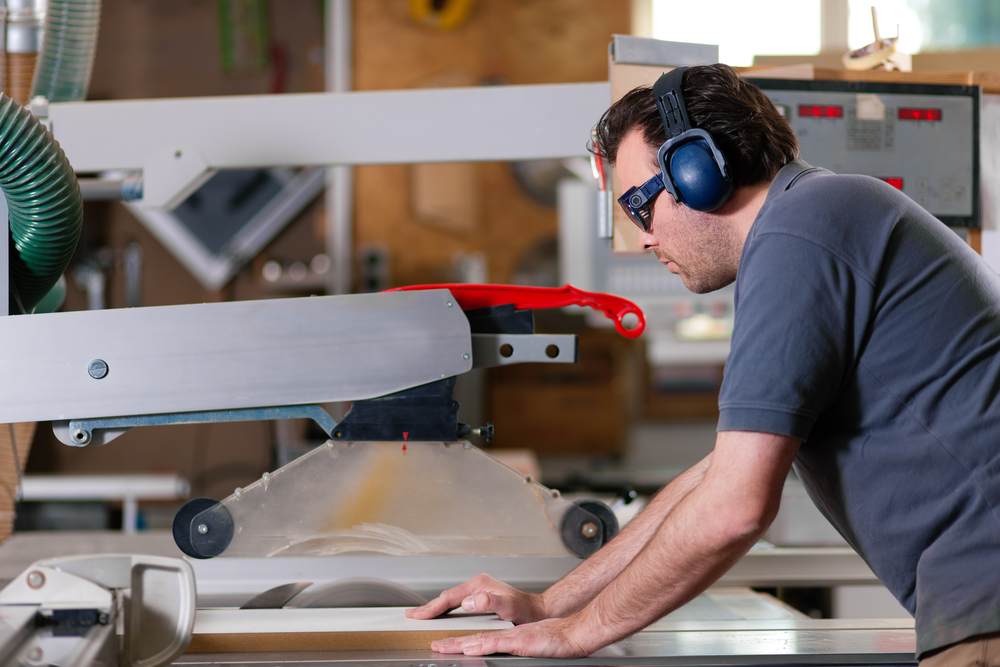
Anyone often around noise at 85 dB or higher, hearing protection becomes a critical requirement. This is chiefly true in job sites like construction sites, manufacturing plants, or any environment where equipment, tools, or gear produce too much noise.
You can encounter unsafe noise levels even in recreational pursuits—such as attending shows, utilizing leaf blowers, or shooting sports—making hearing protection helpful outside of a job setting.
Poor hearing protection can lead to tinnitus or hearing loss. If you find yourself in this situation, take action immediately—start with a thorough hearing test and explore hearing aid solutions to reconnect with the sounds you enjoy.
Choosing protection based on Noise Reduction Ratings (NRR)
The effectiveness of hearing protection is evaluated by its Noise Reduction Rating (NRR). This rating shows how much sound the protector can block, given in dB. A more substantial reduction in sound is provided by increased NRR ratings. For instance, earplugs with an NRR of 30 dB can decrease an 85 dB noise level to 55 dB, keeping you comfortably within safe exposure limits.
When choosing hearing protection, consider the particular noise levels you’re exposed to and confirm your choice delivers enough reduction to stay below the 85 dB limit.
Comfort is key for sustained use of protection
Although the NRR is essential, comfort is just as important for securing that the protection will be used consistently over time. An uncomfortable or cumbersome protective gear raises the inclination to remove it, which leaves your ears to hazardous noise.
Choosing comfortable hearing protection leads to consistent wear, thus lowering the threat that you will be exposed to noise periodically. For illustration, if earmuffs are too heavy or lead to discomfort, you may find yourself removing them periodically, subjecting your ears to dangerous noise levels.
Different choices of hearing protection to choose from
A range of hearing protection options are on offer, all with their own set of pros and drawbacks:
- Offering superior noise reduction, Foam Earplugs are placed inside the ear canal. While they are lightweight and disposable, some wearers may experience discomfort.
- Pre-Molded Earplugs are positioned slightly outside the ear canal; they are reusable—a more sustainable choice—and are also easier to handle than foam earplugs.
- Earmuffs, which cover the entire ear, are well-suited for environments with changing noise levels due to how easy they are to take on and off, but they can be heavy or hot during prolonged use.
The optimal type of protection to choose is dictated by your own comfort and the needs of the environment you are in. An instance is construction workers favoring earmuffs for their simple convenience, while factory workers may opt for earplugs for a full day of wear.
Making sure you wear it constantly
The most effective hearing protection is always the device that you steadily keep in place. Interrupting the use, even for a brief time, may have permanent consequences for your hearing. It is extremely important to identify a solution that optimizes between comfort, protection, and convenience for this reason.
Protect your hearing for the long term
We are always enclosed by noise, yet choosing the appropriate protective equipment ensures your ears are protected, enabling you to continue enjoying your acoustic environment.
Call us today to talk about your likelihood of hearing loss from noise and the optimal ways to safeguard your hearing.
The content of this blog is the intellectual property of MedPB.com and is reprinted here with permission.
The site information is for educational and informational purposes only and does not constitute medical advice. To receive a personalized free hearing test and hearing loss consultation, call today to set up an appointment.