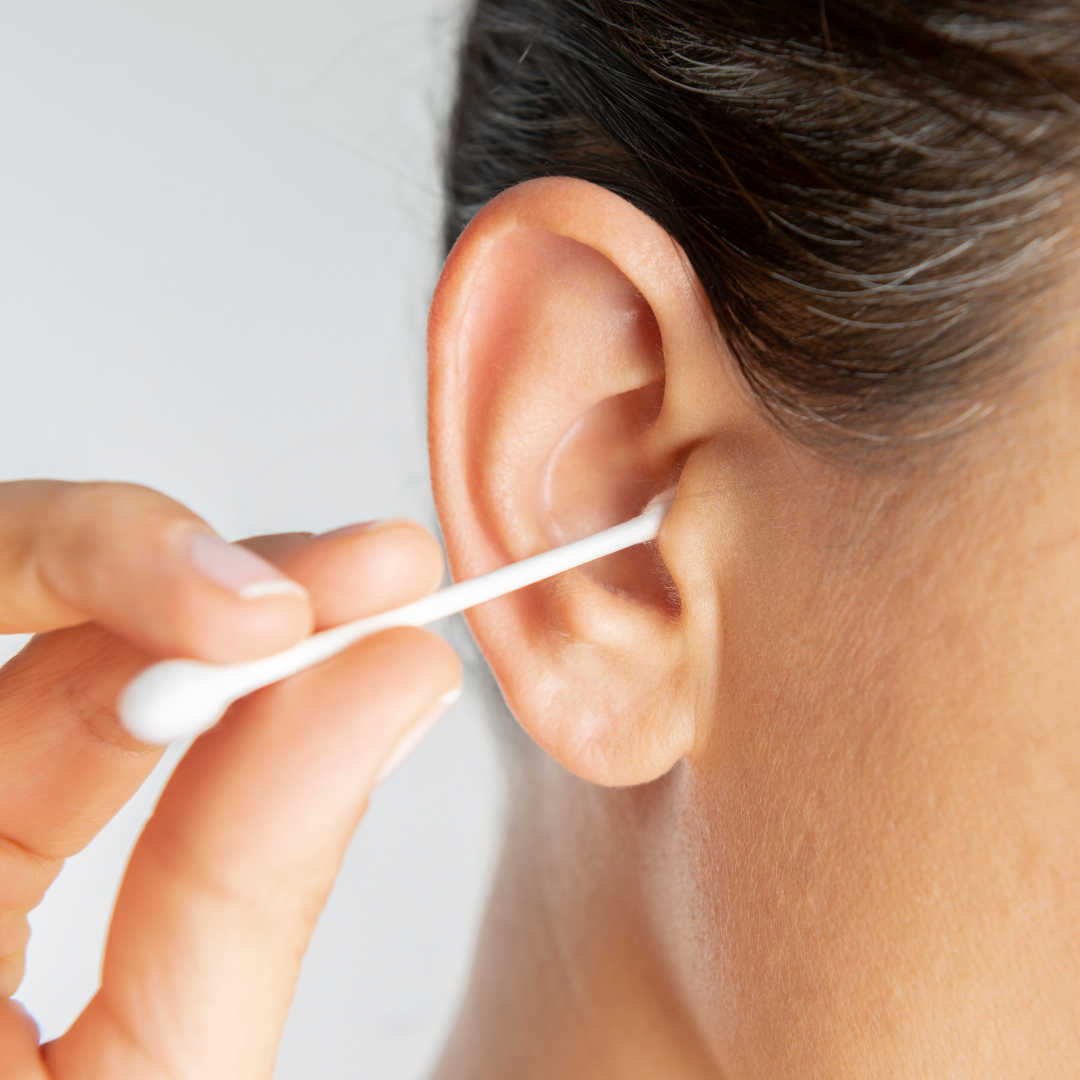
Although cotton swabs feel like accessible ear-care tools, introducing them into the canal hinders self-cleaning mechanisms and may harm your hearing. Our specialists determine if cerumen warrants clinical clearing and advise on targeted methods designed to protect your hearing health. Ear canals typically maintain themselves without assistance; nonetheless, if stubborn buildup develops, we help individuals safely eliminate excess wax.
Why Cotton Swabs Create Complications Inside the Ear
Clinically speaking, earwax, or cerumen, should never be regarded as dirt or debris. It traps dust and debris, helps limit bacterial growth, lubricates the ear canal, and protects its sensitive skin. Routine chewing and epithelial cell migration continuously transport spent wax toward the concha, where it falls out or clears during bathing.
Using a cotton swab within the ear canal halts this physiological self-cleaning function. Although the cotton may collect a small amount of wax, it often pushes the remaining material closer to the eardrum. Repeated use can pack wax into a firm blockage and create the plugged sensation that encourages even more cleaning.
You may gently utilize cotton swabs across the external auricle, but you should avoid inserting them into the internal canal.
Clinical Complications Associated with Q-Tip Insertion
The skin lining the ear canal is thin and easily scratched. Small dermal abrasions produce soreness or light bleeding while allowing microbes to enter, raising the incidence of outer-ear infection. There is also a risk that the cotton tip will detach and become stuck deep inside the auditory canal.
Swab-related clinical injuries include:
- Earwax compressed tightly against canal walls
- Canal abrasions, dermal irritation, edema, and hemorrhage
- Bacterial or fungal ear canal infection
- Foreign body retention including detached cotton fibers
- Traumatic perforation of the eardrum
- Injury to the tiny hearing bones behind the eardrum
- Transient hearing reduction or permanent sensorineural loss
- Ringing in the ears, balance disruption, or sharp ear pain
Severe injuries are infrequent yet emerge readily if an arm is bumped, the swab slips, or the stick is driven too far.
How Frequently Should You Remove Earwax?
Most individuals do not need to perform earwax maintenance on a calendar schedule. Functional ear canals naturally evacuate wax, and everyday washing clears away deposits on the outer ear. Overcleaning can dry or irritate the canal and may increase the likelihood of infection or impaction.
Cerumen removal is indicated when buildup obstructs the canal, hinders tympanic membrane visualization, degrades hearing aid performance, or generates symptoms.
How to Address Earwax Safely at Home
Whenever cerumen remains asymptomatic, avoiding manual intervention represents the safest course of action. Clean exclusively around the exterior auricle using a soft, moist cloth, letting the auditory canal clean itself naturally.
If hardened wax requires softening, we can guide you toward over-the-counter cerumenolytics or drops featuring mineral oil, carbamide peroxide, glycerin, or saline. Use only the labeled amount and for the labeled duration. Discontinue administration immediately if the solution sparks pain, severe dizziness, skin rash, or worsening ear fullness.
At-home ear flushing is not suitable for all ears and demands prior clinical verification and step-by-step guidance from a provider. Under no circumstances should you ever use a pressurized dental oral irrigator in the ear. Reject risky methods such as ear candling, rigid metal scoops, camera-guided probes, hairpins, and home suction gadgets. These hazardous instruments often cause cutaneous burns, sharp cuts, eardrum ruptures, or compounded cerumen impaction.
Clinical Indicators for Professional Earwax Removal
Schedule an appointment when an ear remains plugged after an appropriate softening treatment, wax appears deeply impacted, or home care repeatedly fails. Professional removal is also preferable when a person cannot safely hold still, has a narrow ear canal, uses hearing aids, or has medical or surgical factors that make drops or irrigation risky.
You should seek professional assessment for:
- Severe ear pain, intractable itching, or outer ear tenderness
- Otorrhea containing blood, active pus, serous fluid, or an unpleasant odor
- Fever combined with visible swelling or redness around the ear
- The rapid emergence of tinnitus or episodic dizziness
- Rapid-onset hearing impairment or ongoing hearing deficits post-cleaning
- A suspected tympanic membrane rupture or retained swab material
- Frequent wax buildup that occludes or damages hearing aids
Regard sudden unilateral hearing loss as a time-sensitive medical emergency instead of presuming it is earwax. Prompt testing can distinguish a blockage from a time-sensitive inner-ear problem.
Clinical Methods for Safe Earwax Extraction
The clinical process starts with high-magnification otoscopy or microscopy to establish cerumen presence and screen for infections, abrasions, or tympanic perforations. The ideal extraction strategy is dictated by the consistency of the wax, ear canal dimensions, clinical background, past ear procedures, and patient physical stability.
Expert removal procedures include:
- Medical-grade wax softeners administered prior to or during the procedure
- Calibrated warm-water irrigation using body-temperature fluid for intact eardrums
- Precision micro-suction under continuous microscopic visualization
- Manual instrument clearance utilizing dedicated ear loops, fine curettes, or small forceps
Operating under direct magnification allows the clinician to avoid sensitive canal walls and halt instantly if the patient experiences pain. Patients presenting with dry or tightly impacted wax may require a combination of these clinical approaches. Following the procedure, the ear is re-evaluated to guarantee that both the canal passage and eardrum are clear and healthy. Should lingering fullness, tinnitus, balance instability, or reduced hearing continue, targeted diagnostic exams can pinpoint the secondary factor.
Request an Appointment for Clinical Earwax Removal
Should your ears feel congested or your hearing performance decline, arrange an evaluation with our audiology clinic instead of reaching for swabs. Your scheduled visit includes reviewing active symptoms, past ear procedures, hearing aid status, home management methods, and individual risk factors for cerumen impaction. Contact us to request an earwax-removal appointment.
The content of this blog is the intellectual property of MedPB.com and is reprinted here with permission.
The site information is for educational and informational purposes only and does not constitute medical advice. To receive a personalized free hearing test and hearing loss consultation, call today to set up an appointment.