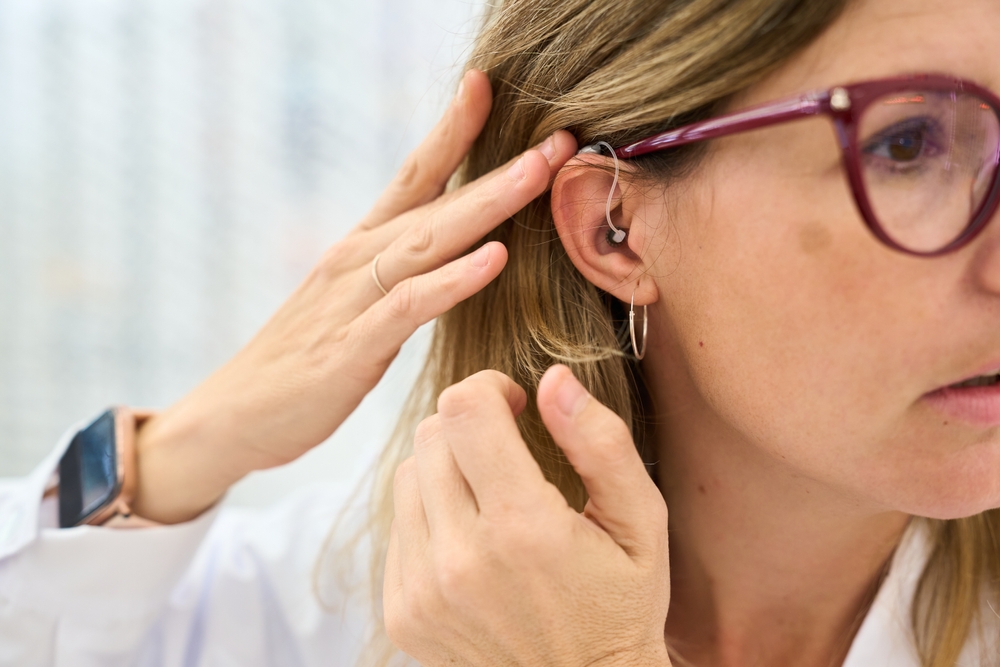
A primary reason individuals put off addressing auditory deficits is the assumption that assistive devices will be unsightly or awkward to wear. That defensive reaction is totally logical from a consumer standpoint! Regrettably, some people even experienced social alienation because acquaintances falsely assumed that wearing a visible aid signaled a complete inability to comprehend spoken dialogue.
Consequently, this outdated, negative stereotype persists, preventing numerous individuals from seeking professional care. However, contemporary medical engineering has ensured that current hearing solutions look and function in a completely unexpected manner. Thanks to rapid technological evolution, modern devices are remarkably downsized, highly ergonomic, and exceptionally covert.
Should your reluctance stem entirely from memories of obsolete, bulky hardware, you owe it to yourself to discover current medical advancements.
The Outdated Devices of Your Imagination Have Been Replaced
If you close your eyes and picture a hearing aid, you might imagine something large, hooked over the ear, and visible from across the room. Should that be your current expectation, you are inadvertently recalling the clunky designs common to the 1980s and 1990s.
Over the last few generations, this medical technology category has experienced a total structural evolution. Continuous refinements in ergonomic styling, nanometer-scale circuitry, and digital audio engineering have radically overhauled the modern cosmetic profile. Current product lines are incredibly compact, architecturally clean, and purpose-built to harmonize with your features or sit entirely out of sight.
A multitude of current designs fit entirely inside the physical ear canal, ensuring they remain hidden from view during normal social encounters. Alternative styles occupy a tiny footprint behind the pinna, utilizing ultra-light materials and customizable color palettes to match hair or skin tones perfectly.
Understanding Your Options: A Guide to Contemporary Device Form Factors
To understand how these sophisticated medical devices are physically configured, review this concise anatomical breakdown:
Invisible-in-Canal (IIC) Technology
This tier represents the absolute pinnacle of cosmetic concealment. Engineered to rest deep inside the ear canal, IIC systems are individually molded to match the precise contours of your ear. When engaging with others at standard social distances, these units are utterly unnoticeable to the naked eye. They’re a popular choice for people with mild to moderate hearing loss who prioritize subtlety.
Receiver-in-Canal (RIC) and Receiver-in-the-Ear (RITE) Designs
This is the most common style today. A tiny component sits behind the ear, connected by a nearly invisible wire to a small speaker in the ear canal. From an aesthetic standpoint, they look very similar to trendy consumer tech or modern bluetooth monitors. The vast majority of peers will fail to perceive the apparatus unless conducting a highly deliberate close-up inspection.
Traditional Behind-the-Ear (BTE) Reimagined
While these models house all electronic components within a casing resting behind the pinna, their dimensions are drastically reduced compared to legacy models. They’re often recommended for more significant hearing loss and offer excellent performance without the bulky appearance people expect.
The bottom line is simple: modern assistive hearing systems are crafted to serve your life quietly, not to draw attention to your ears.
The Functional Revolution: Modern Instruments Are Tiny Supercomputers
It is vital to recognize that this technological revolution is not simply a visual upgrade. Today, they function more like smart devices than traditional medical equipment. A vast majority feature native Bluetooth connectivity, enabling seamless, wireless streaming of telephonic communication, media, and television audio directly into your auditory pathway.
Through proprietary mobile apps, patients can effortlessly adjust acoustic thresholds or modify directional settings completely hands-free. Say you’re walking into a noisy restaurant: You can fine-tune your hearing to match the environment in seconds. Rechargeable batteries have also replaced the tiny ones people used to struggle with. The process is as simple as placing the units into their charging dock each night, identical to charging your cell phone.
Overcoming the Psychological Barriers to Better Hearing
Even with this encouraging information, taking the initial step toward treatment can induce anxiety. Scheduling an appointment can feel like a profound internal challenge because it represents an open admission of sensory alteration. Such moments frequently spark an uncomfortable sense of vulnerability, as though we are losing command over our physical frames.
Consider a healthier perspective: wearing a contemporary hearing system does not mean your body has failed you. They’re simply a sign of change, which happens to us all. Choosing to hear better is absolute evidence that you are choosing to optimize your body and enhance your overall quality of life.
Visualize the freedom of utilizing a completely covert acoustic system that restores your ability to track jokes, engage in crowded restaurants, and capture every nuance of the activities you love. That is a magnificent example of reclaiming control over your life!
Discover the Reality of Modern Otolaryngological Solutions
To dismantle old assumptions, the best strategy is to witness these design breakthroughs with your own eyes. Our clinical team cordially invites you to visit our facility, interview our staff, and evaluate different form factors in a stress-free, zero-obligation environment. View this consultation simply as a tactile opportunity to discover just how radically changed this technology has truly become.
You will likely be utterly delighted to discover how microscopic, physically seamless, and high-performing today’s options truly are! Do not let outdated myths delay your wellness—call our specialized practice or book your appointment online today.
The content of this blog is the intellectual property of MedPB.com and is reprinted here with permission.
The site information is for educational and informational purposes only and does not constitute medical advice. To receive a personalized free hearing test and hearing loss consultation, call today to set up an appointment.